Video of the first Vintage F1 race at the Tamiya USA track....by Charles Lightfoot...Incredible Work!!!
Wednesday, May 15, 2013


Monday, May 13, 2013
RCFIA Returns
http://www.rcfia.com/schedule/
"For it’s second season, the RCFIA Formula 1 series travels to 6 tracks across Northern California. With the addition of 2 new races and tracks, the RCFIA Formula 1 series will be even more interesting to watch and participate in!
"For it’s second season, the RCFIA Formula 1 series travels to 6 tracks across Northern California. With the addition of 2 new races and tracks, the RCFIA Formula 1 series will be even more interesting to watch and participate in!
The 2013 RCFIA Gran Primo D’Sonoma June 2nd 2013
The 2013 RCFIA Grand Prix of Ripon June 29th 2013
The 2013 RCFIA Grand Prix of Union City July 7th 2013
The 2013 RCFIA Grand Prix of Roseville July 27th 2013
The 2013 RCFIA Grand Prix of Antioch August 10th 2013
The 2013 RCFIA Grand Prix of Ukiah August 24th 2013
The 2013 RCFIA Grand Prix of Ripon June 29th 2013
The 2013 RCFIA Grand Prix of Union City July 7th 2013
The 2013 RCFIA Grand Prix of Roseville July 27th 2013
The 2013 RCFIA Grand Prix of Antioch August 10th 2013
The 2013 RCFIA Grand Prix of Ukiah August 24th 2013
Friday, January 25, 2013
V2 build V.2

To continue on with the build up of the V2, there are some options to consider. One is the use of the damper tube instead of the roll shock or side shock.

Tamiya sells the 54413 aluminum roll damper, but the delrin version that is included with the X1 kit is virtually the same. Both are used with many types of grease, from pan car greases to 1/8 diff oils. I prefer the diff oils since I know what the rating is and they are available everywhere. There really is nothing wrong with the side shock but it's more work to set up and is a little more maintenance.
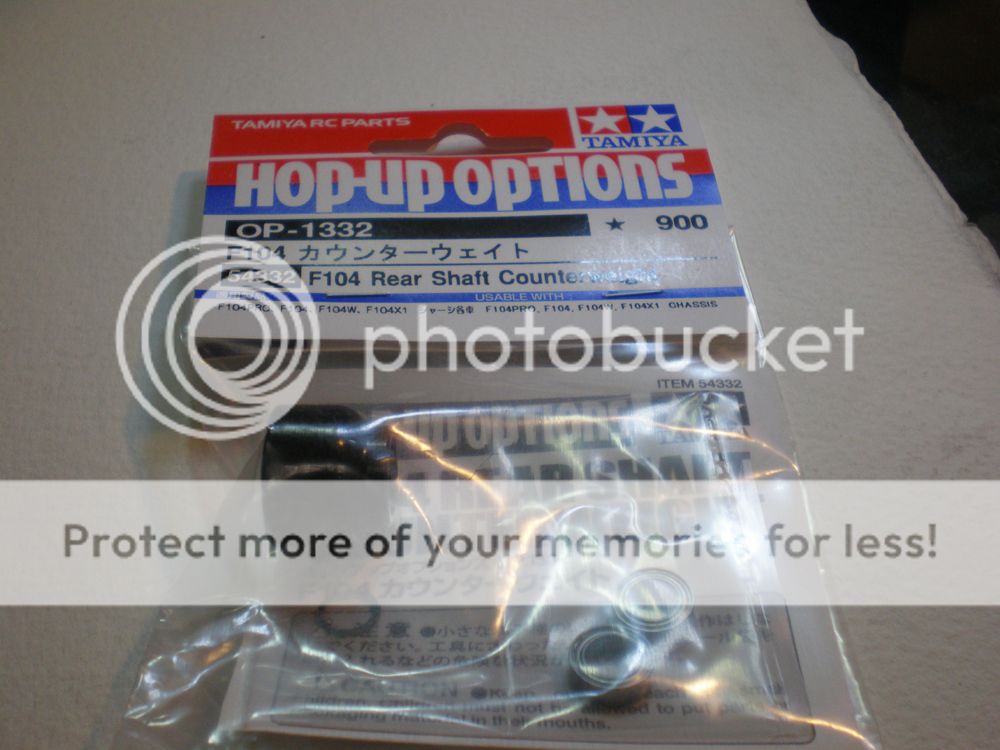
The 54332 Counterweight is also something to consider. This is another X1 part. With the older Tamiya tires, I did not notice a big difference with or without the counterweight, and much the same for foam tires. However, with the new "TCS" tires, the counterweight seems to be a big help. I find the car drives a lot better, and feels more balanced. I think part of this is the better grip afforded by the TCS rubber. With foam the cars are locked down and lighter is better, but the rubber tires need a little more balance when they have some grip.


The 54375 carbon brace...Do you need it? I'm not really convinced you do if you also have the aluminum pod. The pod comes with an aluminum cross brace anyway, so the carbon fiber is overkill. It might be good if you ran the plastic pod for some reason. IF you don't want to use the aluminum cross brace, then it is necessary, but the plastic from the kit is fine with the aluminum pod...
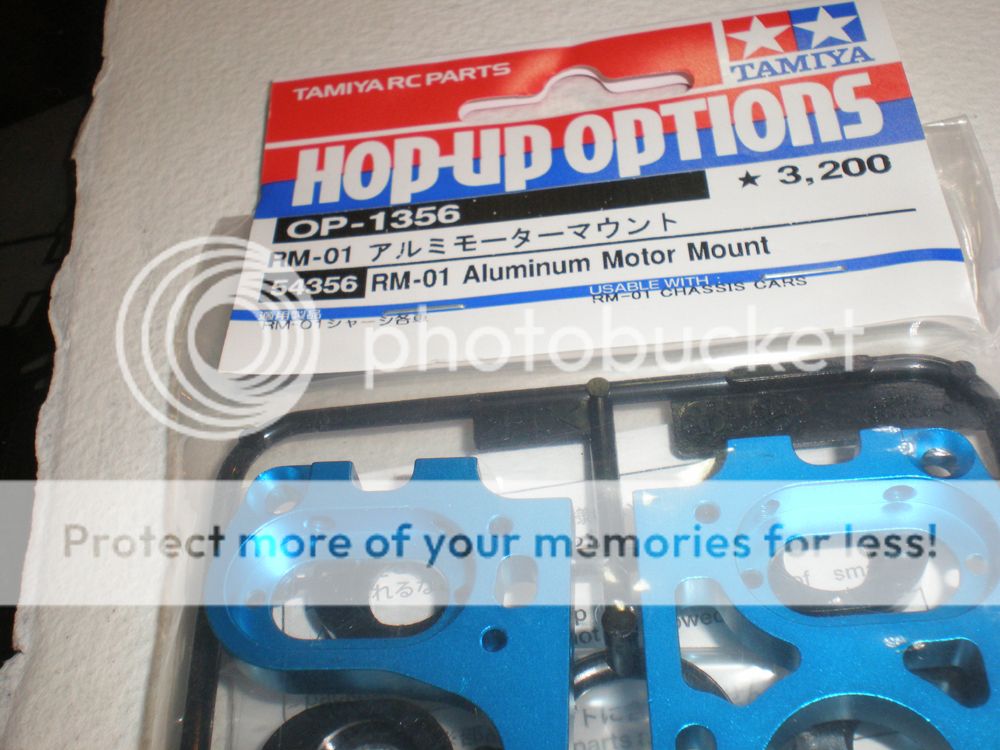
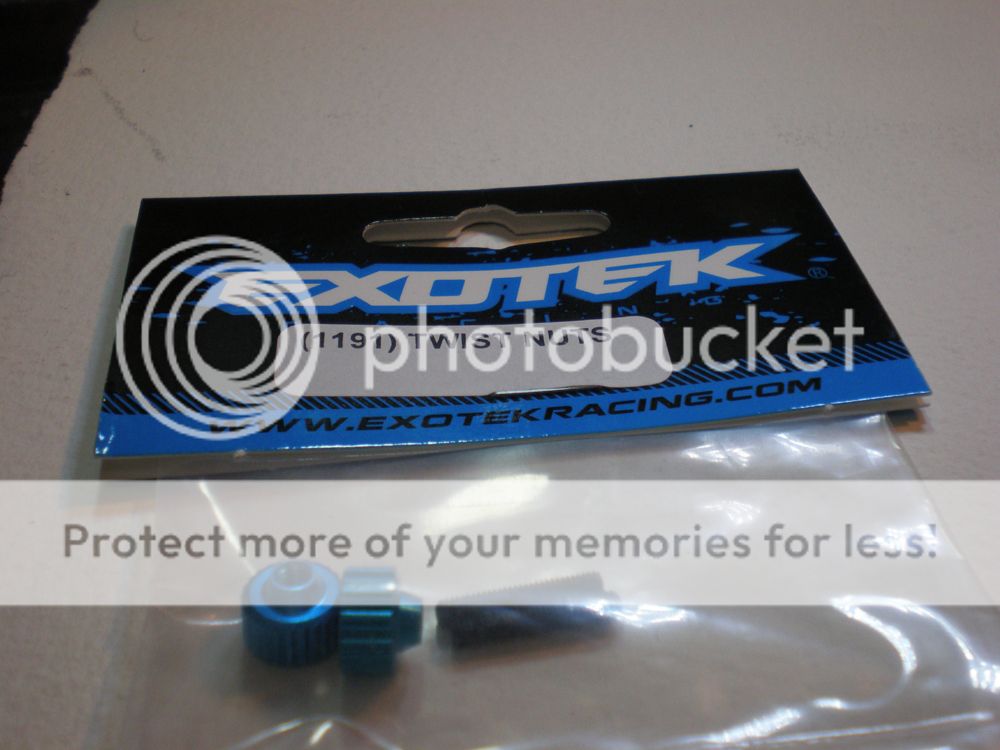

The odd ball part here is this doubles sided carpet tape. A nice rectangular patch on your chassis will keep the battery from moving at all. It retains it's stick for a long time, so much so that I find it's best to stick your hand to it a few times to kill some of the adhesive before you first put the battery in. This is great for sedans as well..
That's it for the extra stuff I used on the car, but I'll have some more tips on putting everything together in a bit. Enjoy Tamiya USA's Fred Medel as he explains the F104V2 setting sheet and what the adjustments do....
Tuesday, January 22, 2013
VBC Flash F1 prototype

http://www.area52.cc/news/3263-vbc-f1-flash04-teaser.html
VBC to introduce a new F1 car...very cool front end setup, especially the steering which should help a lot of the bump steer woes faced by direct linkage cars.
Via Area 52
V2 build V.2 front end
I built a second V2 car so that I could have something fresh, as I have a ton of time on the first car I bought since receiving it. Along they way I have picked up quite a few things that I thought I'd share as small tips that help make a nicer build on the car. So lets start with some front end items.
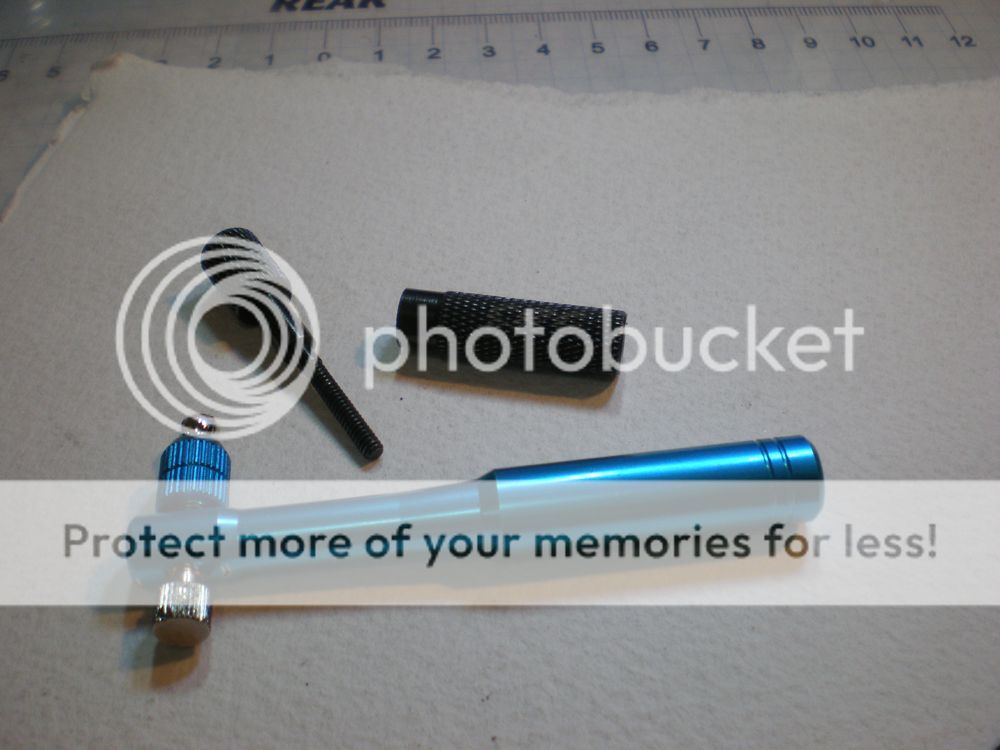
On the bottom is a Much More ball cup reamer that I use for the upper suspension arms. This is better than squeezing the arm with a pliers to free up the suspension.


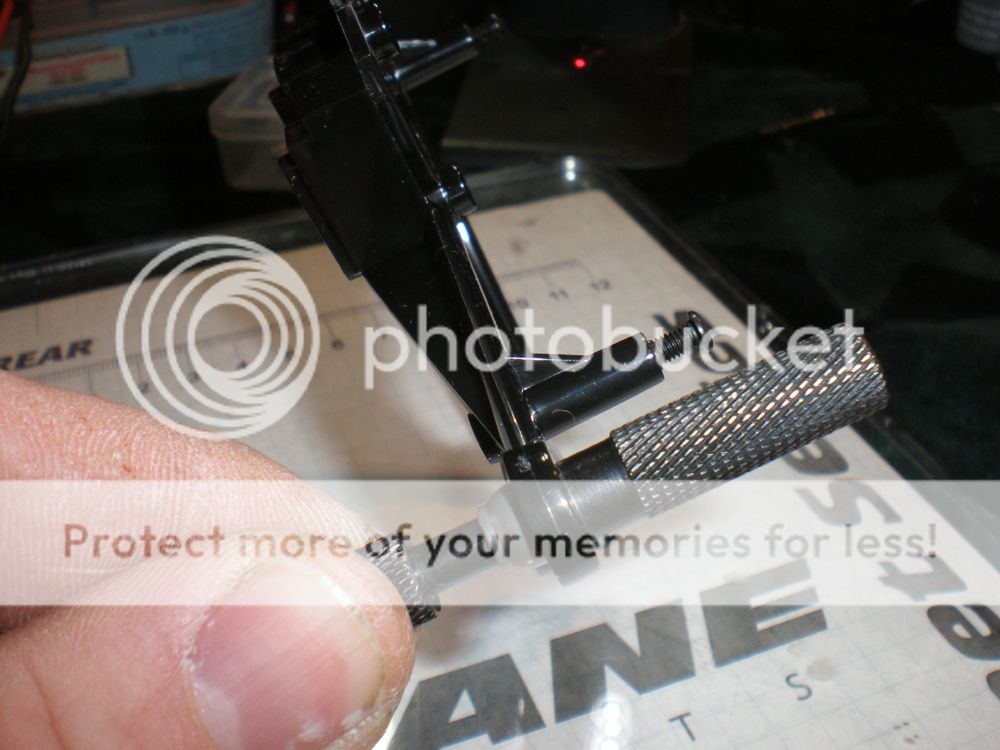




It also can be helpful to partially thread the arm from the bottom with a 3mm tap.


An example of how the partially and fully assembled part looks.
That's it for now, we'll get into the rest a bit later.
Friday, December 14, 2012
A great point on racing at big events
Rod Canare (rtypec on rctech) has been doing a bunch of posts on his trip to Japan as North American Tamiya Series champ. It's a great group of posts, and while he was there for sedan racing, he makes a great point:
"When my number was called I took off from the and as soon as I hit the first corner, followed by the chicane and left hand sweeper leading into the infield, I knew I was in trouble. Over steer everywhere! The track definately had grip and I felt that the tires worked fine, but the body just affected handling so much that whatever mechanical traction the chassis had became a moot point. As I struggled with the car for the first half of the qualifier, the theme song from the Benny Hill show started to play in my head. Additionally, thoughts of how frustrated my performance so far has been, and how embarrasing this must be for not only myself, but for those who wished me the best of luck, started to cross my mind. Fortunately, or unfortunately, driving the car required my undivided attention and I was able stop thinking about it and just hustle it. A big part of racing is your frame of mind. Once the car is on the track, you've got what you've got and nothing will change that fact your stuck out there until your run is completed. You can't stop to fix what's wrong and you can't over analyze things. Just do the best you can and get the most out of what the car will give you. My car was bad, my driving not much better, and I wrung it out for all that it's worth. Afterwards, I was asked if my back was sore because I carried that car lol. Unfortunately, lap times suffered tremendously. Despite going faster with a time of 14.566, the top qualifier pulled off a 14.170."
Full post
Thread
Very good insight on the mental end of racing, and also how to strategize when you are limited on time...
"For the second qualifier, I made no changes to the car but opted to use the Audi R8 instead of the Ferrari that it would provide a little more steering. My justification for this decision was that if it worked, great. If it didn't, atleast I'll be going slow in style. In hindsight, this may have screwed me over since quality track time was paramount and every opportunity to get a good run in mattered. There was no room to take one step forward and two steps back, which happened to be the case with my setups and choice of bodies."
"I used the final practice session as an installation run with the freshly rebuilt car and a new setup. I focused on getting a feel for the car and work on getting more of a feel for the track, all in three minutes. With the new parts and settings, my car did something that it hasn't done all weekend so far, it was squeeling tires! I've got traction and the car was predicatable. I wished our practice sessions were longer, I really needed the track time to figure out how to drive. After three minutes, I was a bit off pace. That was understandable since I wasn't really driving that hard because I just wanted to get a feel for things and save the car, without having to do a post-wreck trash'n dash repair job on a "freshy"."
"When my number was called I took off from the and as soon as I hit the first corner, followed by the chicane and left hand sweeper leading into the infield, I knew I was in trouble. Over steer everywhere! The track definately had grip and I felt that the tires worked fine, but the body just affected handling so much that whatever mechanical traction the chassis had became a moot point. As I struggled with the car for the first half of the qualifier, the theme song from the Benny Hill show started to play in my head. Additionally, thoughts of how frustrated my performance so far has been, and how embarrasing this must be for not only myself, but for those who wished me the best of luck, started to cross my mind. Fortunately, or unfortunately, driving the car required my undivided attention and I was able stop thinking about it and just hustle it. A big part of racing is your frame of mind. Once the car is on the track, you've got what you've got and nothing will change that fact your stuck out there until your run is completed. You can't stop to fix what's wrong and you can't over analyze things. Just do the best you can and get the most out of what the car will give you. My car was bad, my driving not much better, and I wrung it out for all that it's worth. Afterwards, I was asked if my back was sore because I carried that car lol. Unfortunately, lap times suffered tremendously. Despite going faster with a time of 14.566, the top qualifier pulled off a 14.170."
Full post
Thread
Very good insight on the mental end of racing, and also how to strategize when you are limited on time...
"For the second qualifier, I made no changes to the car but opted to use the Audi R8 instead of the Ferrari that it would provide a little more steering. My justification for this decision was that if it worked, great. If it didn't, atleast I'll be going slow in style. In hindsight, this may have screwed me over since quality track time was paramount and every opportunity to get a good run in mattered. There was no room to take one step forward and two steps back, which happened to be the case with my setups and choice of bodies."
"I used the final practice session as an installation run with the freshly rebuilt car and a new setup. I focused on getting a feel for the car and work on getting more of a feel for the track, all in three minutes. With the new parts and settings, my car did something that it hasn't done all weekend so far, it was squeeling tires! I've got traction and the car was predicatable. I wished our practice sessions were longer, I really needed the track time to figure out how to drive. After three minutes, I was a bit off pace. That was understandable since I wasn't really driving that hard because I just wanted to get a feel for things and save the car, without having to do a post-wreck trash'n dash repair job on a "freshy"."
Tuesday, December 4, 2012
A tire decal how to link
I found this neat link for a tutorial on how to apply tire logo decals permanently. Pretty cool.
http://www.rc10talk.com/viewtopic.php?f=37&t=27863
http://www.rc10talk.com/viewtopic.php?f=37&t=27863
Monday, November 19, 2012
Chatter about chatter
Does your car chatter?
This has been a reoccurring theme lately. The introduction of the Pit Shimizu and Tamiya "TCS" tires has been a good thing, but it's a lot different from foam tire racing, or even the older style Tamiya tires.
Many of the racers I talk to are concerned about their cars chatter/hopping. I get a little upset to see it myself. Typically, a car that chatters in the corners is having some sort of problem. Pan cars that chatter are worrisome for sure, but consider that we are in a situation which is not typical of pan cars. These cars now run heavy rubber tires, with a tremendous amount of grip. They are also narrow. Now add in a surface like carpet, and you're definitely looking at some hop. These cars are not smoothly getting into a drift angle like foam tire shod cars do. Everybody seems to want to cure this immediately since it's so disturbing.
Maybe it's a lot of worry about nothing.
I was thinking back to the 2010 TCS North American Finals. Danny Hua won the class and the trip to Japan, and I remember quite vividly seeing his car chatter the front end on the left side of the track. Like a lot of people who see this stuff now, I thought "Wow, his car chatters a lot" with a bit of concern. At the same time, he had a fast, race winning car. Could some chatter be the sign that your car is developing enough grip? It may be. I remember reading one of the late great Carroll Smith's full size racing books where he explained tire "judder" on full size formula cars. One thing that stuck with me was not only that it was at one point a big concern to the mechanics and engineers, but when they figured out WHY it was happening , they became less worried. It also turned out to be an indication that the driver had figured out how to get all the power down, and only the best drivers experienced the judder.
I'm not saying that a chattering car is a good thing, and obviously if the car is going nuts with the chatter, it's a negative. I just think that maybe some amount of chattering is probably part of the nature of rubber tires, especially on high traction circuits. To me, if the lap times are there, and the car is getting around the way you want it to, I don't think chattering is huge concern. If it can be cured I think that is a good thing, but I'm not sure some chatter is 100% bad.
This has been a reoccurring theme lately. The introduction of the Pit Shimizu and Tamiya "TCS" tires has been a good thing, but it's a lot different from foam tire racing, or even the older style Tamiya tires.
Many of the racers I talk to are concerned about their cars chatter/hopping. I get a little upset to see it myself. Typically, a car that chatters in the corners is having some sort of problem. Pan cars that chatter are worrisome for sure, but consider that we are in a situation which is not typical of pan cars. These cars now run heavy rubber tires, with a tremendous amount of grip. They are also narrow. Now add in a surface like carpet, and you're definitely looking at some hop. These cars are not smoothly getting into a drift angle like foam tire shod cars do. Everybody seems to want to cure this immediately since it's so disturbing.
Maybe it's a lot of worry about nothing.
I was thinking back to the 2010 TCS North American Finals. Danny Hua won the class and the trip to Japan, and I remember quite vividly seeing his car chatter the front end on the left side of the track. Like a lot of people who see this stuff now, I thought "Wow, his car chatters a lot" with a bit of concern. At the same time, he had a fast, race winning car. Could some chatter be the sign that your car is developing enough grip? It may be. I remember reading one of the late great Carroll Smith's full size racing books where he explained tire "judder" on full size formula cars. One thing that stuck with me was not only that it was at one point a big concern to the mechanics and engineers, but when they figured out WHY it was happening , they became less worried. It also turned out to be an indication that the driver had figured out how to get all the power down, and only the best drivers experienced the judder.
I'm not saying that a chattering car is a good thing, and obviously if the car is going nuts with the chatter, it's a negative. I just think that maybe some amount of chattering is probably part of the nature of rubber tires, especially on high traction circuits. To me, if the lap times are there, and the car is getting around the way you want it to, I don't think chattering is huge concern. If it can be cured I think that is a good thing, but I'm not sure some chatter is 100% bad.
Wednesday, November 14, 2012
Not gone, just underground...
It's been pretty quiet here on the F1.blog, but it's been busy. I've been trying to come to grips with a rubber tire setup for a TCS legal F104v2. So it's been a couple weeks of hiding in the under mountain secret lair/track trying to work it all out.
 Anyway, I have been trying a of of things to get my car working consistently from session to session. I had some times where the car would be very fast, but then be no where near as good if conditions like temperature changed or traction went up or down due to car count. I also have been getting a lot of good suggestions and tips from friends and acquaintances. The big thing was to try to boil all this stuff down into something workable.
The big problem with this car being new, and a little unfamiliar, was that I did not have my "go to" adjustments figured out. Usually I have a few things that are sort of the big adjustments that will send your car in one direction or another and you know you've changed something. I had a bit of time where I felt like everything was vague and I was flailing a bit. I was trying to use both what I knew and the concepts I was learning from other people as well, and it was not meshing. So last weekend I decided to go back to the baseline to try to get my car working.
One thing I was pleased with was using a stiffer side spring. In the past I had run my Exotek car fairly stiff since it seemed to me the heavier rubber tires needed a stiffer car. I had recently began to try to make lighter springs work based on what I had seen with some of the on line setup sheets, and when the track was lower traction, it worked well. As soon as traction came up, it was not easy to drive, and in fact, somewhat unstable. It was still fast at times.
The problem with stiffer springs is that they can stabilize the car too much. The link car needs to roll a little to get around the corner, but there has to be a balance to be able to drive the car in a straight line. This is where the preload comes in. With the soft springs like Associated black or Tamiya pink/copper. you have to preload the spring a bit in a lot of cases to stabilize the car. With the softer springs, they really need to be set at just touching or even backed off the pod plate. This will dictate a lot on how the wraps the corner. With a really stiff spring, you can be backed of the pod plate so the car will rotate, but when the spring goes into compression, it will keep the car fairly flat. I think that a lot of the traction roll problems with these cars are generated from the rear of the car versus the front. This brings me to my next point, dampening.
I'm probably going to sound like a kook here, but I think that really heavy dampening is key. I had been up to 50,000 wt diff oil in the X1 damper tube, but I was wondering if maybe more could be better. After talking it over with one of my buddies who was endorsing massive amounts of dampening, I decided to go big. After some playing around, I settled on 120,000 wt Losi diff oil in the tube. This made the car much flatter, so much so that it would slide rather than traction roll. This again goes toward the theory that the much higher unsprung weight of the rubber tires requires the car to be a lot stiffer to control all that mass.
What really got the car working correctly with the higher dampening was a boatload of rear droop. I am now at 3mm over ride height. The droop seems to really give the car a lot of forward bite. I can get on the car pretty much where ever I want to. Previously, I was having to be a lot more careful with throttle inputs. Don't get me wrong, I find that smooth throttle input makes for very fast laps with F1 cars, but I feel a ton of confidence with the added bite.
At the same time, a minimal amount of front droop appears to better for me. I think it helps to keep the weight on the front tires under power to retain the on power steering. Steering feel is also less "floaty" and more direct. I had tried a lot of front droop, but I started migrating back to a minimal front droop setup, and I prefer it.
Another thing I had tried was a very horizontal shock. Usually this does produce a lot of on power steering at the expense of rear stability in my experience, but I'm not 100% sure about that now. I actually felt like the car was a little more stable, but more mid corner out. It still seemed to turn in. Oddly enough, I also tried some heavy rate springs with the shock in a more angled setting, which I usually run. The heavy springs also seemed to stabilize the car in certain corners, especially the sweeper. Returning to the usual Short Black spring set brought the steering back. I wonder if the stiff shock inhibits the cars ability to roll or at least, articulate the links? Chassis roll seems to be the key to cornering with the link cars.... At this point, I am running the shock with quite a bit of angle. That seems to be the best for my track conditions.
I should also add that I was encouraged to run my battery to the rear of the chassis. I had been running the short pack with the electronics behind it, but I moved the RX and ESC to the sides of the chassis and began to experiment with the battery. Full back seemed to cause to push in the sweeper, so I moved it forward a small amount at a time. What seemed to work for me was about 3/16 to 1/4" (4-6mm) off the back of the chassis. I'm finding it's easy to tune the car a little by moving the battery in small amounts.
So here is the setup sheet....for lower bite try gold side springs and a yellow center shock spring....

Thanks to The Passehls, T Marshall, RedBullFxx and Rocket Ron for the help.....

The big problem with this car being new, and a little unfamiliar, was that I did not have my "go to" adjustments figured out. Usually I have a few things that are sort of the big adjustments that will send your car in one direction or another and you know you've changed something. I had a bit of time where I felt like everything was vague and I was flailing a bit. I was trying to use both what I knew and the concepts I was learning from other people as well, and it was not meshing. So last weekend I decided to go back to the baseline to try to get my car working.
One thing I was pleased with was using a stiffer side spring. In the past I had run my Exotek car fairly stiff since it seemed to me the heavier rubber tires needed a stiffer car. I had recently began to try to make lighter springs work based on what I had seen with some of the on line setup sheets, and when the track was lower traction, it worked well. As soon as traction came up, it was not easy to drive, and in fact, somewhat unstable. It was still fast at times.
The problem with stiffer springs is that they can stabilize the car too much. The link car needs to roll a little to get around the corner, but there has to be a balance to be able to drive the car in a straight line. This is where the preload comes in. With the soft springs like Associated black or Tamiya pink/copper. you have to preload the spring a bit in a lot of cases to stabilize the car. With the softer springs, they really need to be set at just touching or even backed off the pod plate. This will dictate a lot on how the wraps the corner. With a really stiff spring, you can be backed of the pod plate so the car will rotate, but when the spring goes into compression, it will keep the car fairly flat. I think that a lot of the traction roll problems with these cars are generated from the rear of the car versus the front. This brings me to my next point, dampening.
I'm probably going to sound like a kook here, but I think that really heavy dampening is key. I had been up to 50,000 wt diff oil in the X1 damper tube, but I was wondering if maybe more could be better. After talking it over with one of my buddies who was endorsing massive amounts of dampening, I decided to go big. After some playing around, I settled on 120,000 wt Losi diff oil in the tube. This made the car much flatter, so much so that it would slide rather than traction roll. This again goes toward the theory that the much higher unsprung weight of the rubber tires requires the car to be a lot stiffer to control all that mass.
What really got the car working correctly with the higher dampening was a boatload of rear droop. I am now at 3mm over ride height. The droop seems to really give the car a lot of forward bite. I can get on the car pretty much where ever I want to. Previously, I was having to be a lot more careful with throttle inputs. Don't get me wrong, I find that smooth throttle input makes for very fast laps with F1 cars, but I feel a ton of confidence with the added bite.
At the same time, a minimal amount of front droop appears to better for me. I think it helps to keep the weight on the front tires under power to retain the on power steering. Steering feel is also less "floaty" and more direct. I had tried a lot of front droop, but I started migrating back to a minimal front droop setup, and I prefer it.
Another thing I had tried was a very horizontal shock. Usually this does produce a lot of on power steering at the expense of rear stability in my experience, but I'm not 100% sure about that now. I actually felt like the car was a little more stable, but more mid corner out. It still seemed to turn in. Oddly enough, I also tried some heavy rate springs with the shock in a more angled setting, which I usually run. The heavy springs also seemed to stabilize the car in certain corners, especially the sweeper. Returning to the usual Short Black spring set brought the steering back. I wonder if the stiff shock inhibits the cars ability to roll or at least, articulate the links? Chassis roll seems to be the key to cornering with the link cars.... At this point, I am running the shock with quite a bit of angle. That seems to be the best for my track conditions.
I should also add that I was encouraged to run my battery to the rear of the chassis. I had been running the short pack with the electronics behind it, but I moved the RX and ESC to the sides of the chassis and began to experiment with the battery. Full back seemed to cause to push in the sweeper, so I moved it forward a small amount at a time. What seemed to work for me was about 3/16 to 1/4" (4-6mm) off the back of the chassis. I'm finding it's easy to tune the car a little by moving the battery in small amounts.
So here is the setup sheet....for lower bite try gold side springs and a yellow center shock spring....

Thanks to The Passehls, T Marshall, RedBullFxx and Rocket Ron for the help.....
Wednesday, October 24, 2012
Subscribe to:
Posts (Atom)